| |
| Thursday, 26 November 2026 |
| Bruegel: The Seasons and the World |
| Gavin Plumley |
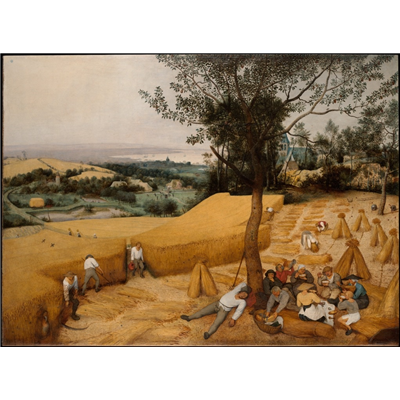 |
In 1565 Peter Bruegel the Elder was commissioned to create a series of paintings for a dining room in Antwerp. The Images, charting the course of a year, changed the way we view the world through art. Landscape had previously been a decorative backdrop to dramas both sacred and profane but in Bruegel’s hands the landscapes and our interaction with it became the focus. Looking at the paintings such as The Return of the Herd, Hunters in the Snow and The Gloomy Day this lecture explores how Bruegel pioneered a whole new way of thinking about the environment and the individual places within a shifting cosmos. Gavin Plumley, a welcome returning lecturer, is a writer and broadcaster who appears on BBC Radio 3 and Radio 4 and contributes to newspapers, magazines and concert and opera programmes worldwide. He lectures widely about the culture of Central Europe. Recent appearances include Klimpt and The Kiss in cinemas worldwide and talks for the Hay and Cheltenham Festivals, The Royal Opera House National Gallery, the National Trust, the National Theatre, the British Museum and the V & A. His first book A Home for all Seasons is out now. |
|
| Thursday, 28 January 2027 |
| Madras and Calcutta |
| Anthony Peers |
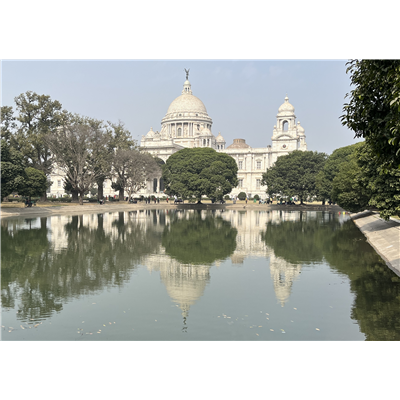 |
By looking first at Madras and then Calcutta there is an opportunity to look at the very best of the buildings constructed in the heyday of the East India Company. This lecture touches on the early 17th century origins of the East India Company and considers the tentative architectural endeavours of the amateur architects and engineers working at the Company’s behest. Study is made of the Company’s magnificent late 18th and early 19th century classical buildings as well as of the stunning late flowering of the Indo Saracentric in Madras and the remarkable Edwardian Baroque of the Victoria Memorial in Calcutta. Anthony Peers, another returning lecturer, is a freelance historic buildings consultant educated as an Architectural Historian at Manchester University and trained in building conservation at the Institute of Advanced Architectural Studies in York. After two years with SAVE Britain’s Heritage where he wrote Deserted Bastions and worked with the English Heritage Listing Division on the review of military buildings. In the mid-1990s he was employed by the DTI in Bombay, India, setting up and running an innovative project to repair George Gilbert Scott’s university buildings and training local architects and craftsmen in conservation techniques and philosophy. From 1998 to 2010 he worked as Rodney Melville and Partners’ historian involved with research, analysis, assessment and conservation planning at such sites as The Workhouse, Southwell; Aston Hall, Birmingham; The Royal Institution, London, and Cliveden. |
|
| Thursday, 25 February 2027 |
| Death by Wallpaper |
| Lynne Gibson |
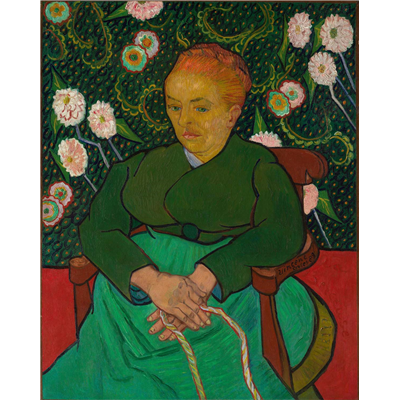 |
Was Napoleon killed by his wallpaper? This story begins in 1775 with a German chemist and his experiments with arsenic. The resulting powerful green colour reached its popularity when worn by “Queen of Fashion” Empress Eugênie. It was printed on wallpaper by Morris & Co and was a favourite of plein-air artists such as Monet, Cezanne and Vincent van Gogh, keen to capture the freshness of nature but a century later it was branded as poison. Lynne Gibson, now working as a freelance lecturer in the History of Art, originally trained as a fine artist and has taught painting, drawing and printmaking in higher and adult education. She has lectured as an art historian to the Universities of Sussex and Bristol where she introduced Understanding Art to the Lifelong Learning Programme and residential summer schools. She gives talks, lectures and guided tours to a wide range of organisations and institutions.
|
|
| Thursday, 25 March 2027 |
| Balenciaga, Dior and Fath |
| Scott Schiavone |
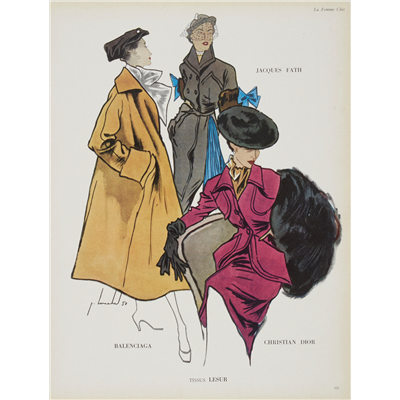 |
Haute couture is an art form, inseparable from fashion, that achieved some of the finest moments during the years following World War II. During this period, Paris reaffirmed its position as the Capital of Fashion and its reputation for producing the most luxurious and creative clothes money could buy. Three names became synonymous with luxury, glamour and elegance during haute couture’s most exclusive and fertile period – Christian Dior, Christobal Balenciaga and Jacques Fath. Scott Schiavone is a fashion historian and Curator and studied at both the University of Glasgow and the London School of Fashion. Scott has worked with fashion and textile collections across the UK including Glasgow Museum, National Museums Scotland and The Harris Museum, Preston, where he is currently the Decorative Art Curator. His areas of expertise are nineteenth and twentieth century French, British and American women’s wear, luxury fashion accessories and marginalised social histories of fashion. |
|
| Thursday, 22 April 2027 |
| Gardening in the Dolfor Hills |
| Wolfgang Schaefer |
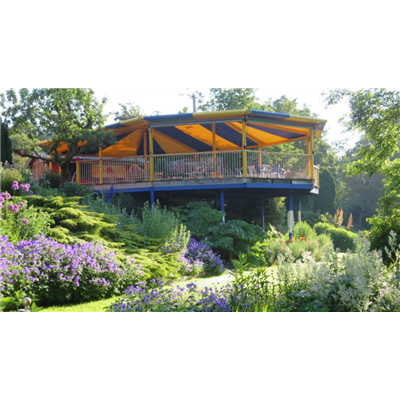 |
Today Cwm Weeg comprises a formal garden of just under 3 acres and surrounded by 34 acres of woodland and wildflower meadows. Cwm Weeg is open every Friday, Saturday and Sunday (2 to 5 pm) from May to September with tea and cake served on Sundays. In 1987 Dr Wolfgang Schaefer and Kingsley George moved from Sussex to live in Cwm Weeg, Dolfor, close to Newtown in Montgomeryshire. Within a few years of taking up residence at the Cwm, major landscaping and gardening projects were undertaken and there has hardly been a period over the last 39 years without ongoing building work. These projects include various terraces, fountains, 4 ponds, grotto, moss garden with rock face and a stumpery and in recent years the levelling of a large car park accommodating buses and a spacious garden pavilion with Visitor Cafe. There have also been three major extensions to the old house which is 16th century and the erection of a large barn with gothic windows plus building a new house by the entrance. The latest project is the erection of a Tower including a funeral crypt and library. |
|
| Thursday, 27 May 2027 |
| See Naples and Die |
| Mike Clegg |
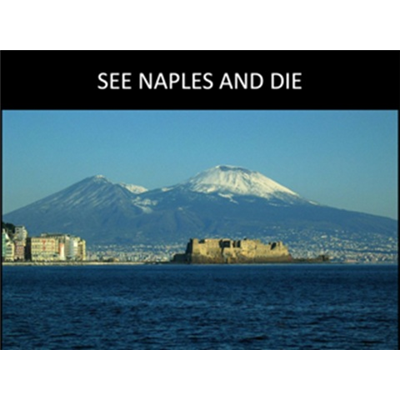 |
There is a well-known expression See Naples and Die but it doesn’t mean what you might think. It means that Naples and the surrounding area is so beautiful that once you have seen it you may die happy. Mike Clegg is one of our favourite returning lecturers who, having ended his service career in the Royal Air Force as political adviser to senior NATO commanders on Greek-Turkish issues, graduated in Archaeology. He has planned and led many tours of and lectures extensively on ancient sites in the Mediterranean and the UK. |
|